The promise is always some version of the same sentence. Restaurant quality pizza in sixty seconds, no experience needed. It reads like advertising copy. It is closer to a specification, and the specification is public.
Since 2010, the recipe for Neapolitan pizza has been written into European law. Commission Regulation (EU) No 97/2010 entered Pizza Napoletana in the register of Traditional Specialities Guaranteed, and the text does the thing recipes normally refuse to do. It gives numbers. Not suggestions, not ranges chosen for comfort. Temperatures, in degrees, and a clock.
Read those numbers next to the spec sheet of a modern outdoor oven and something becomes obvious: the sixty seconds is not the marketing. The sixty seconds is the constraint everything else was designed around.
Sixty to ninety seconds, and not by choice
The regulation is blunt about it. "The baking time must not exceed 60 to 90 seconds." That is not a target, it is a limit written into the product specification of a protected food.
To make a minute enough, the oven has to arrive with heat already banked. The same document sets that too: approximately 485 °C on the cooking floor, approximately 430 °C at the dome. In Fahrenheit, roughly 905 degrees underneath and 806 degrees overhead.
Written into the specification
- 0°FCooking floor
485 °C - 0°FOven dome
430 °C - 60to90Seconds
maximum bake
Source: Commission Regulation (EU) No 97/2010 of 4 February 2010, product specification for Pizza Napoletana (TSG).
Notice which number is bigger. The floor is hotter than the roof, by about 55 degrees Celsius. A pizza oven is not a hot box with a pizza in it. It is a hot stone with a fire arranged above it, and the two are deliberately not at the same temperature.
Why the clock and the stone are the same problem
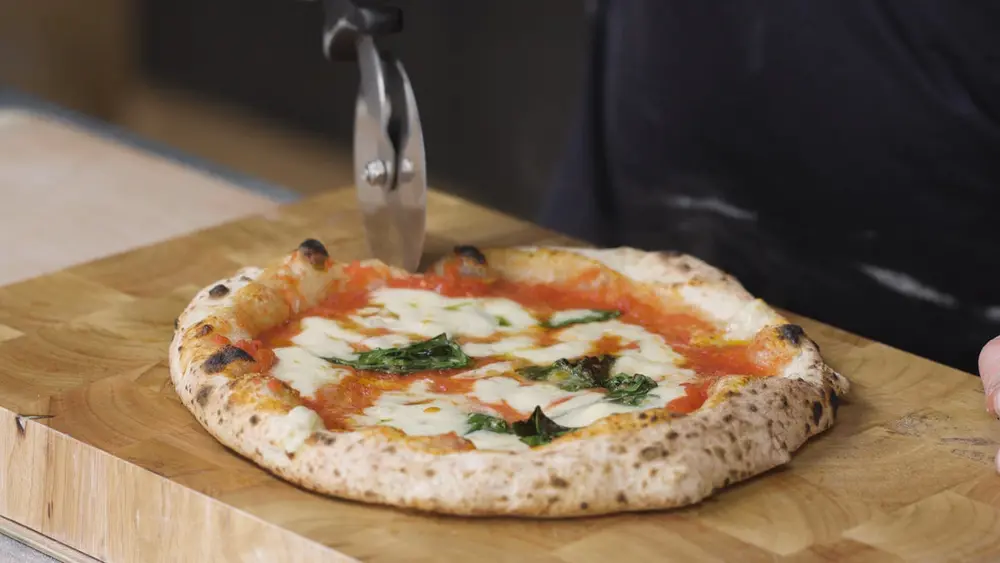
The regulation does not stop at the oven. It also fixes what the food is allowed to reach. The dough, 60 to 65 °C. The tomatoes, 75 to 80 °C. The mozzarella, 65 to 70 °C. The olive oil, 75 to 85 °C.
Put those two lists side by side and the design problem states itself. A floor at 905 °F has to cook a disc of wet dough through, and leave the cheese at about 150 °F. There is only one way to do both, and it is speed. The text even describes the evidence you should see on the finished pizza: the tomatoes, "having lost only their excess water, remain compact and solid", and the basil and oregano "do not look burnt".
Every extra thirty seconds is thirty more seconds of the toppings drying out while the base catches up. So the base is not asked to catch up. It is set from below, fast, by a floor that has been soaking heat long before the pizza arrived.
Two temperatures, one minute
The hotter surface is the one the pizza is lying on. Figures from the Pizza Napoletana TSG specification.
A home oven is not a small pizza oven
This is where most first attempts fail, and it is not a skill problem. Gozney, which has been building live fire ovens since 2010, says it plainly in its own beginners guide: "Almost all pizza styles are cooked at much higher temperatures that can be achieved in a regular home oven."
A kitchen oven asked to make a Neapolitan pizza is being asked to work several hundred degrees below the specification. It gets there in the only way it can, which is by taking longer. Longer is exactly what the toppings cannot survive. That is why a homemade pizza so often arrives pale underneath and tired on top: not a bad recipe, a bake that ran four to ten times too long because the floor was never hot enough to do its half of the job.
The twenty minutes that buy you the sixty seconds
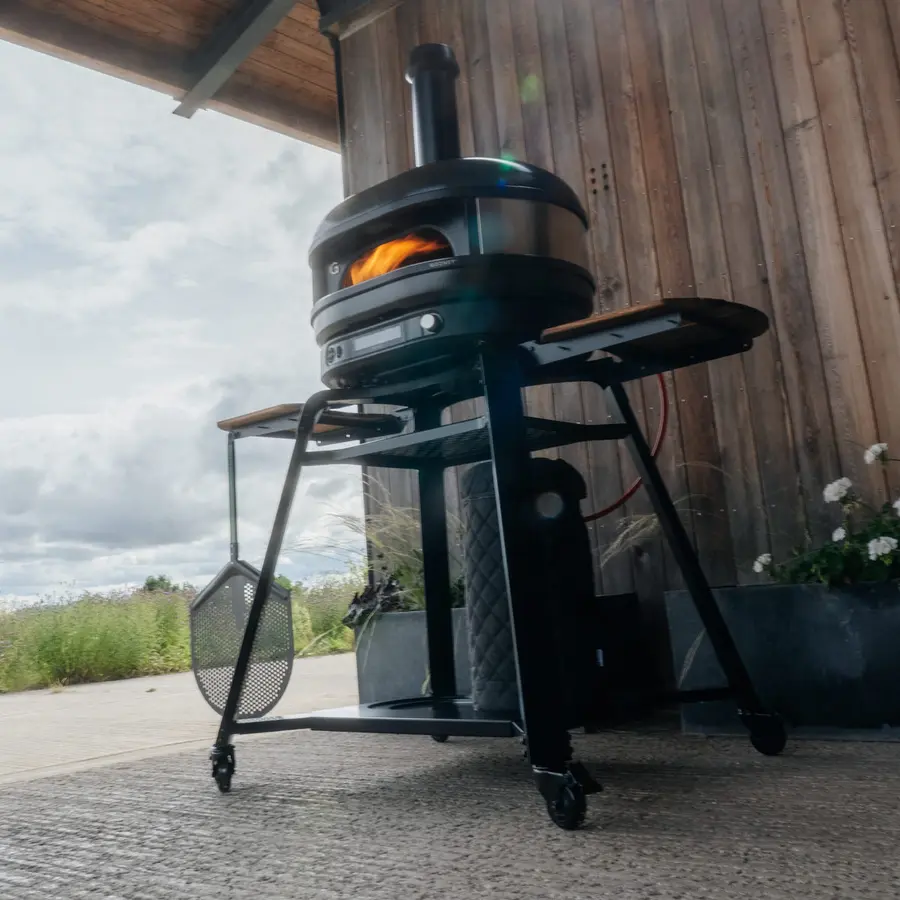
A stone floor holds heat, which is the point, but it also takes time to load it. Gozney publishes the numbers for its smallest oven, the Roccbox: it "reaches 700F/370C in under 20 minutes". Left on the gas beyond that, the same page says, "Dense insulation and a double-layered stone floor keep Roccbox at consistent temperatures up to 950F/500C, pie after pie."
Those last three words are the ones that matter once guests arrive. Holding the temperature is the difference between one impressive pizza and a table that gets fed. The road oven, Tread, is advertised as reaching 500 °C in fifteen minutes.
Roccbox, as published by the maker
- 0minTo 700 °F / 370 °C
from cold - 0°FPeak temperature
500 °C - 12″Largest pizza
that fits
Source: product specifications published on us.gozney.com, August 18, 2026.
The number that decides your pizza is under the floor
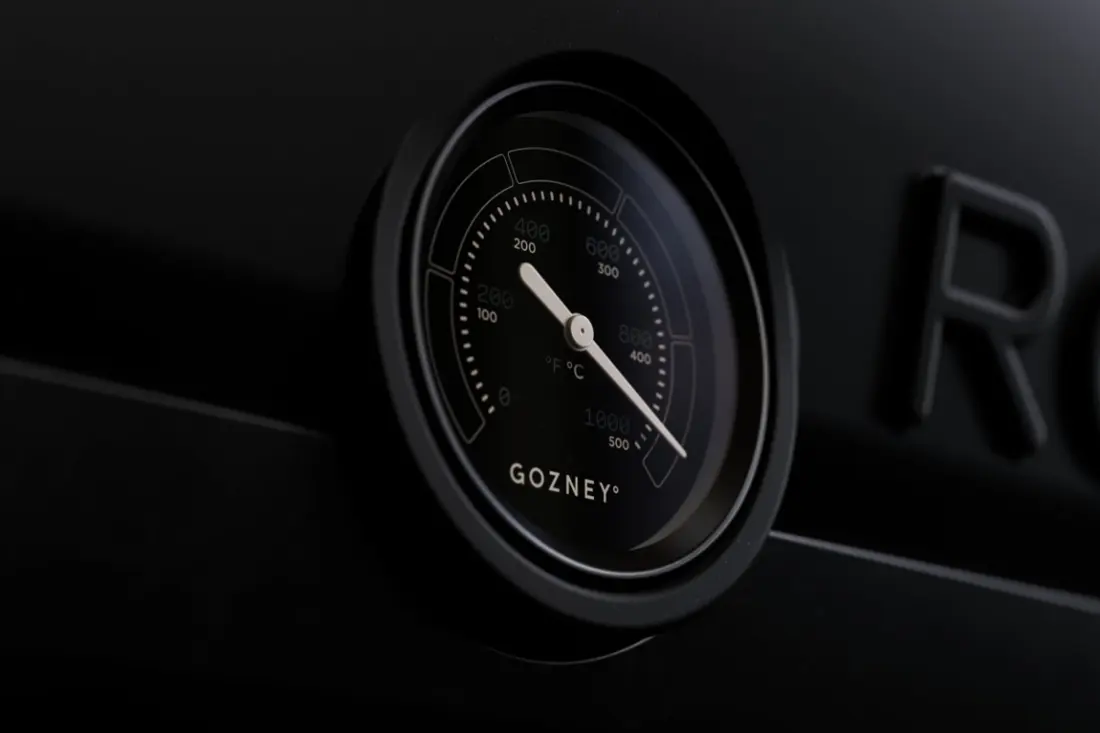
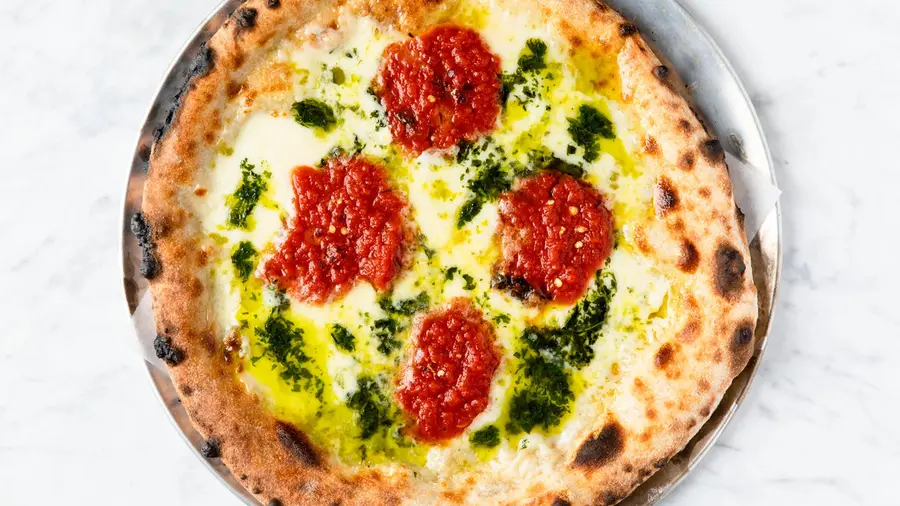
Here is the detail that gives this article its opening photograph. On a Roccbox, the thermometer is not measuring the air. Gozney's own description of the feature is one sentence long: "A precise underfloor thermometer takes the guess work out cooking with fire." The gauge is reading the stone.
On the larger Dome (Gen 2), the brand goes further and shows both numbers at once: the oven carries a digital interface that displays, in the company's words, "real-time air and stone temperature", alongside twin probes for meat. Two readouts, because there were always two temperatures.
That is the quiet answer to why one person's pizza burns on the base while another's comes out pale. They were both looking at one number, and it was rarely the one doing the cooking.
The oven owns the temperature. You own three moves.
Strip out everything the hardware has already decided and what remains is surprisingly small. Three physical moves, and each one is described, in writing, either by the European specification or by the manufacturer's own school.
Move one: the launch
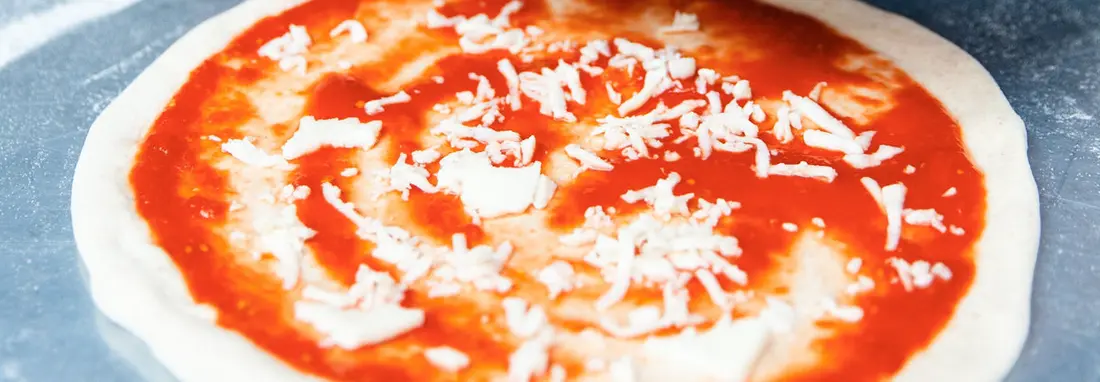
The regulation describes it almost as choreography. The pizza maker "slides it onto the cooking floor of the oven with a quick flick of the wrist, which prevents the garnish from running". The flick is not showmanship. A slow launch drags the toppings backwards across the base and leaves a bare edge at the front.
Two rules from Gozney's own peel guidance decide whether that flick works. The placement peel must be "always clean, dry and free of debris before using", and, less obvious to a beginner: "Never try and use the peel to launch a fresh pizza unless it is cool to the touch." A hot peel steams the underside of the dough, the dough sticks, and the launch fails before it starts.
Move two: the turn
A live fire oven is not evenly hot, and the specification does not pretend otherwise. It instructs the baker to monitor the bake "by lifting its side using a metal peel and rotating the pizza towards the fire, taking care always to use the same initial area of the cooking floor to ensure that the pizza does not burn due to differences in temperatures".
The hard part is not the rotation, it is the timing, and this is where beginners lose the base. Gozney's guidance is a single tell: "Never try and turn your pizza too early", and instead "look out for the crust starting to colour and rise at the back of the oven as an indicator that the pizza is ready to turn." Turn before the dough has set and it folds. Wait past the signal and the far edge is already dark.
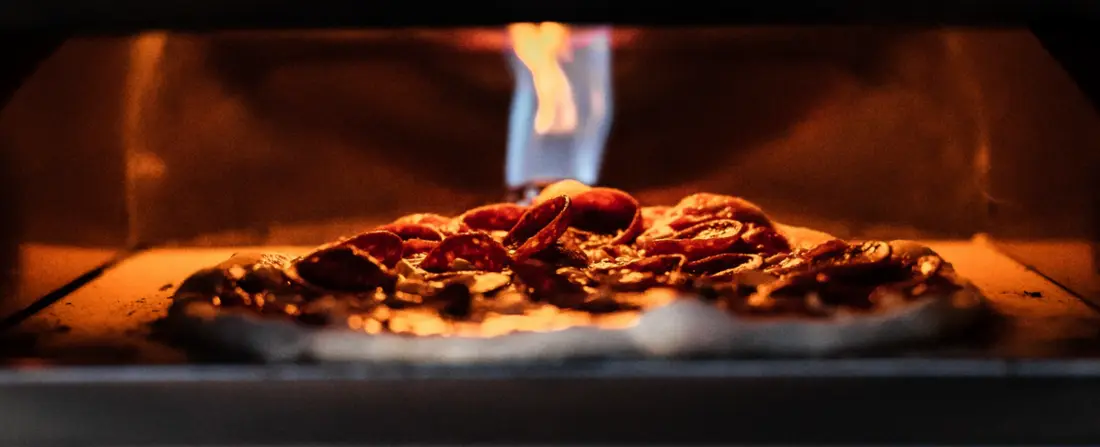
Move three: knowing when to stop
Sixty seconds. Ninety at the outside. There is no version of this where the pizza gets left in for another minute to be safe, because the base is already done and only the toppings are still changing, for the worse.
It is also the move that most rewards practice, and there is a cheap way to practise it that costs no dough at all. Gozney's own tip: "practicing with a cooked pizza can be a great way to hone your skills". Launch it, turn it, pull it, until the peel stops feeling like a stranger.
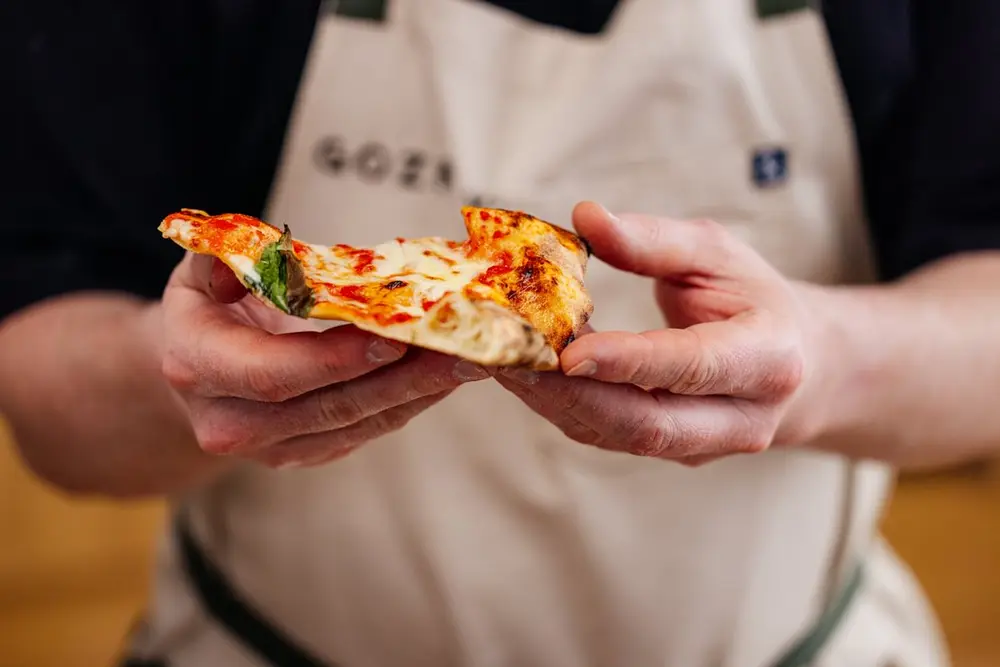
Before any of it, the dough decides
An oven that hits the specification cannot rescue a dough ball that was never going to open. The good news is that the ingredient list is short enough to memorise. Gozney's simple dough, as published in its beginners guide, is four things.
The four ingredient dough, as published
- 00 pizza flour500 g
- Water305 g
- Yeast1.5 g
- Salt12 g
Weigh the water too. In the same guide: "Even just 10g of water either way will make quite the difference to your dough."
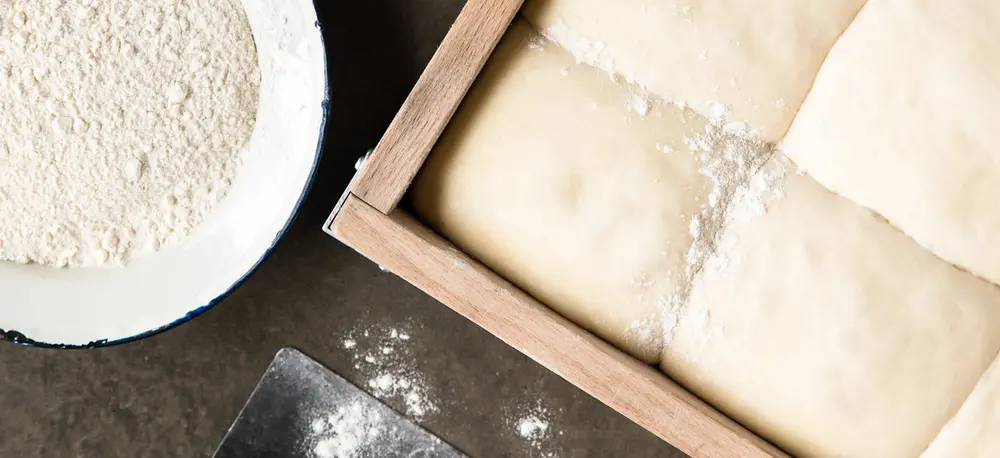
The part that actually separates a good night from a frustrating one is not the mixing, it is the waiting. Dough straight from the fridge will fight you, because the gluten is still tight. Gozney's stretching guide puts the resting window at "around 2-4 hours but can be as long as 8 in a cooler environment", and gives a test that needs no thermometer: poke a ball gently, and "if it springs back to shape straight away, that gluten is still too tight, if it holds the poke a little longer, you're good."
There is one counterintuitive piece of advice in there, and it is aimed squarely at beginners. A very relaxed dough ball opens easily but handles like wet silk. Starting with a slightly less relaxed ball is harder to stretch, and better: in the company's words, "you'll retain a lot more control over the opening process and are less likely to tear your dough." Dusting with semolina rather than flour, they add, "will make stretching a bit more forgiving".
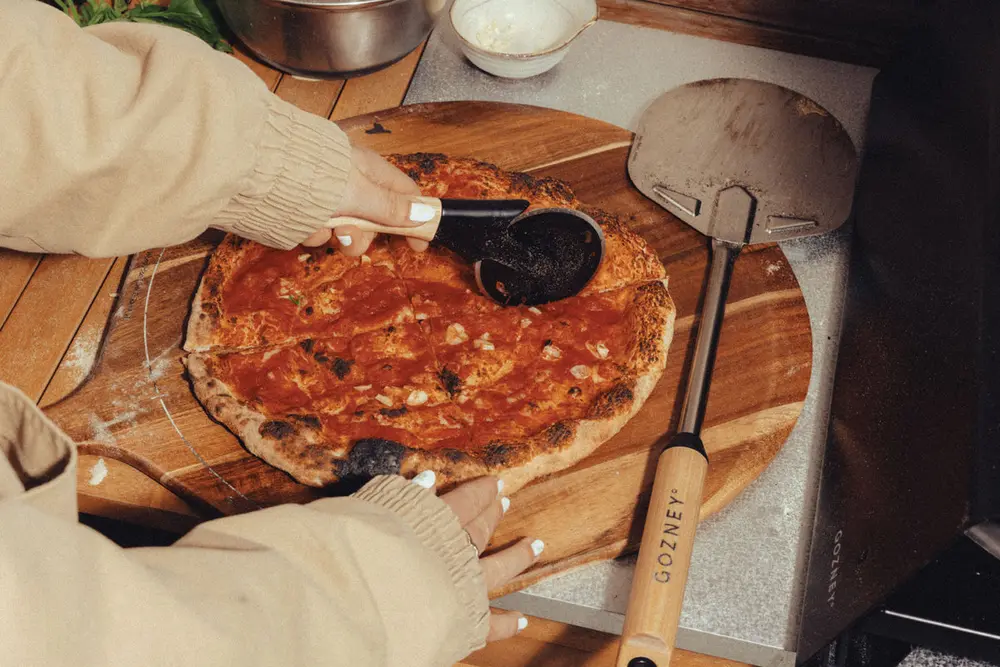
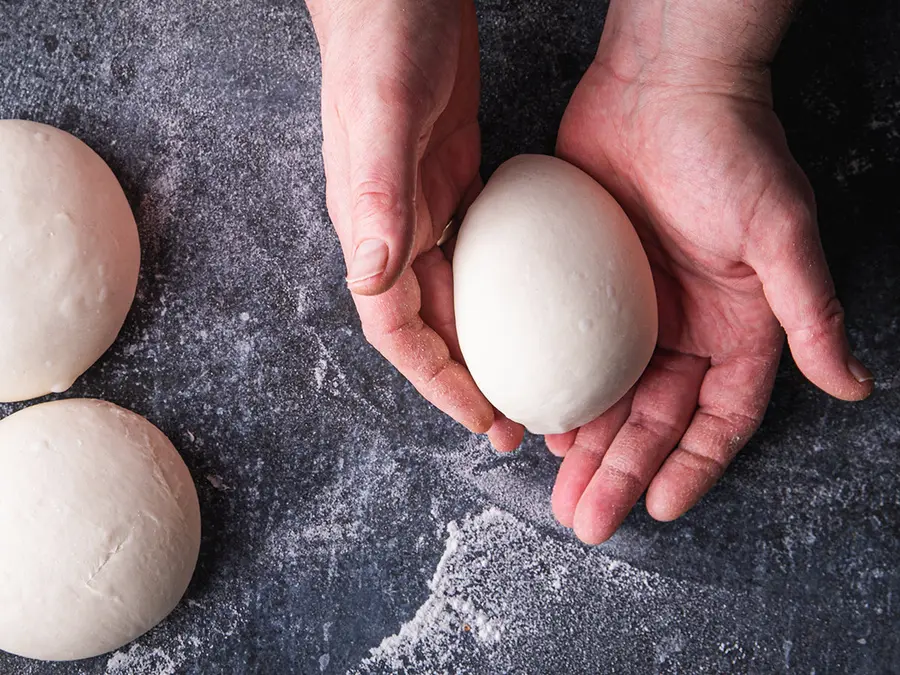
Photos: gozney.com
Then there is time itself, which is the only ingredient that costs nothing. Gozney's proofing guide gives the ranges: bulk fermentation "can be anything from 2-24 hours", a final proof at room temperature "anywhere from 1 to 24-hours or even more", and cold proofing "anywhere from 24 to 72 hours". The long, cold end is where flavour comes from, and it is also the version that lets you do the work the day before and be a guest at your own party.

Which oven, and what actually changes
Once you accept that the specification is the specification, the range stops being a menu of trim levels and becomes a set of answers to one question: how much floor do you need, and where are you standing when you need it.
| Oven | Price | Pizza | Weight | What it is for |
|---|---|---|---|---|
| Roccbox | $399.99 | Up to 12″ | Portable | Gas as standard, optional wood burner, folding legs, underfloor thermometer |
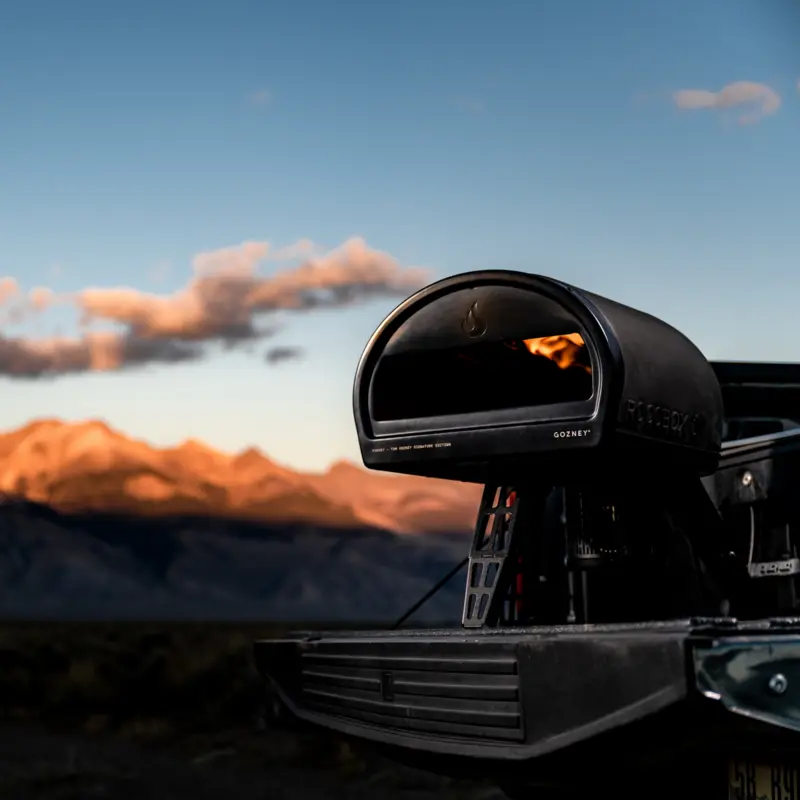
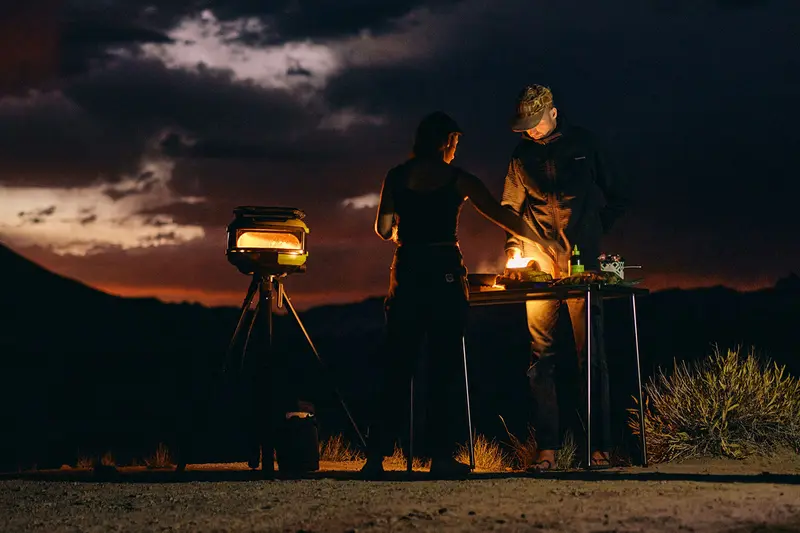
| Tread | $499.99 | Up to 12″ | 29.7 lb | The one that travels: campsites, tailgates, the back of a car |
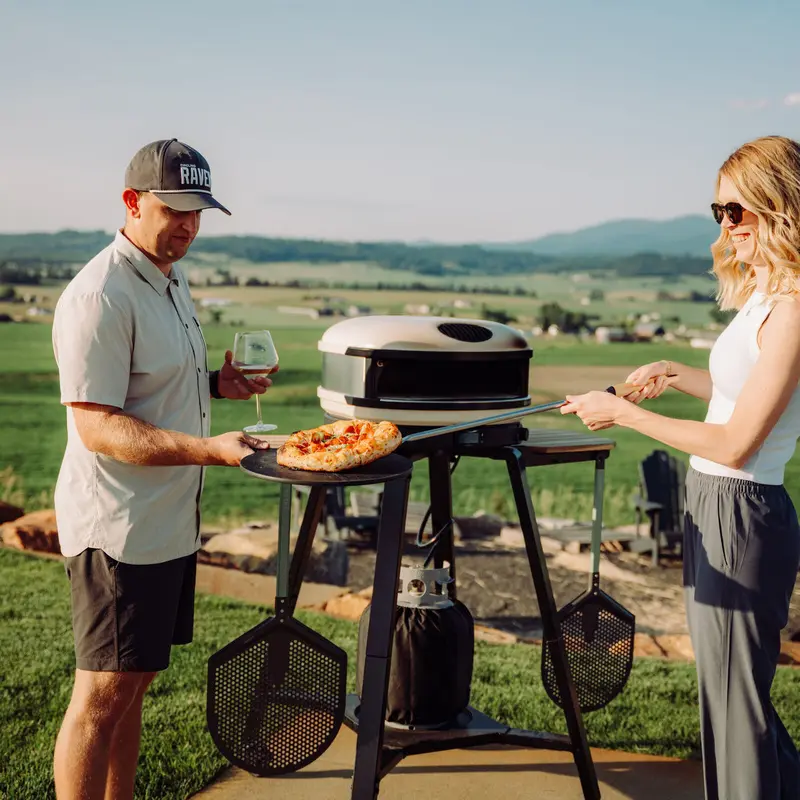
| Arc | $799.99 | Up to 14″ | 47.5 lb | Lateral rolling flame, built to sit in one place and get used often |
| Arc XL | $999.99 | Up to 16″ | 58.5 lb | Same oven, sized for a crowd and for pans that need the room |
| Dome (Gen 2) | $2,299.99 | Two at once | 136.7 lb | Wood, gas or charcoal, live air and stone readout, twin meat probes |
Prices and specifications as published on us.gozney.com, August 18, 2026.
Photos: gozney.com
The honest summary for a first oven: the cheapest way into the specification is the smallest one. Roccbox reaches the same floor temperature as its bigger siblings, it just does it under a 12 inch pizza instead of a 16 inch one, and it folds its legs away afterwards. Registered within 60 days, it carries a five year warranty in place of the standard one.
Who builds them

Gozney was founded in 2010 by Tom Gozney, with its global headquarters in Bournemouth in the United Kingdom and a North American base in Salt Lake City. The company came out of commercial ovens before it made anything for a back garden, and it still publishes case studies with restaurant groups including Franco Manca and MOD Pizza.
Source: gozney.com newsroom. Photo: gozney.com
What people who cook for a living say

"I've cooked with a lot of pizza ovens, but this one I genuinely stand behind. It's the real deal."
Chris Bianco, three time James Beard Award winning chef, quoted on gozney.com

"Tread is a must in the arsenal of outdoor cooking, whether you're cooking in your backyard or out on the road."
Frank Pinello, chef and owner of Best Pizza, Williamsburg, quoted on gozney.com
"We've tested dozens of pizza ovens by this point. This new-and-improved Gozney is in a different league. It transforms a backyard into a live-fire kitchen." Esquire Magazine, quoted on gozney.com
"We've tested the whole Gozney range and it's fair to say that if you're serious about pizza, it's the brand to invest in." BBC Good Food, quoted on gozney.com. Arc XL and Arc Lite both carry a BBC Good Food Five Star Buy rating.
What owners say once the novelty wears off
Gozney publishes its reviews through Trustpilot, which is also the review widget running on its own product pages. As of August 18, 2026 the profile shows a TrustScore of 4.4 out of 5 across 11,593 reviews. The ones worth reading are not the ecstatic ones, they are the ones that describe the learning curve honestly.
★★★★★
A minute to learn, a lifetime to master
"We have made at least a dozen pizzas in it in the few weeks we've had it as well as roasted a variety of vegetables ... I would highly recommend the Dome 2.0 to anyone who is serious about outdoor cooking and has the time and patience to learn how to use it."
Rocky S · experience of July 6, 2026 · Trustpilot
★★★★★
Excellent service and an amazing pizza oven
"The oven itself is absolutely fantastic. Since then, we've hosted one pizza party after another, and every one has been a great success. It heats up quickly, is easy to use, and consistently bakes delicious pizzas with perfectly crisp crusts."
Norbert Buiter · experience of July 13, 2026 · Trustpilot
★★★★★
Amazed how quick the pizzas cook
"We are amazed how quick the pizzas cook compared to old wood pizza oven. Im currently experimenting with different dough recipes."
Emma O'neill · experience of June 19, 2026 · Trustpilot
★★★★☆
Product is brilliant
"Product is brilliant. Packaging is premium ... Food made innocent is exceptional and I'm still learning!"
Jorn Sanda · experience of August 13, 2026 · Trustpilot. This reviewer marked the oven down for a split delivery, not the cooking.
That last note is worth keeping. The reviews that stop short of five stars are almost never about the pizza. They are about a missing accessory or a delivery that arrived in two boxes. The cooking, in the reviews as in the specification, is the part that behaves predictably.
Where to start
If the sixty seconds is what you are buying, the smallest oven in the range already delivers it. It reaches the temperature the specification asks for, it holds it pizza after pizza, and it reads the number that matters from under the stone rather than guessing at the air.
The three moves are yours. They take one afternoon and a cooked pizza to rehearse, and about three pizza nights to stop thinking about.
Roccbox: the specification, at the smallest size it comes in
950 °F, 12 inch pizza, folding legs, underfloor thermometer, gas as standard with an optional wood burner. $399.99 as published today, with a five year warranty on registration within 60 days.
See Roccbox on gozney.com Need a bigger floor or a second pizza at a time? Compare the full range.